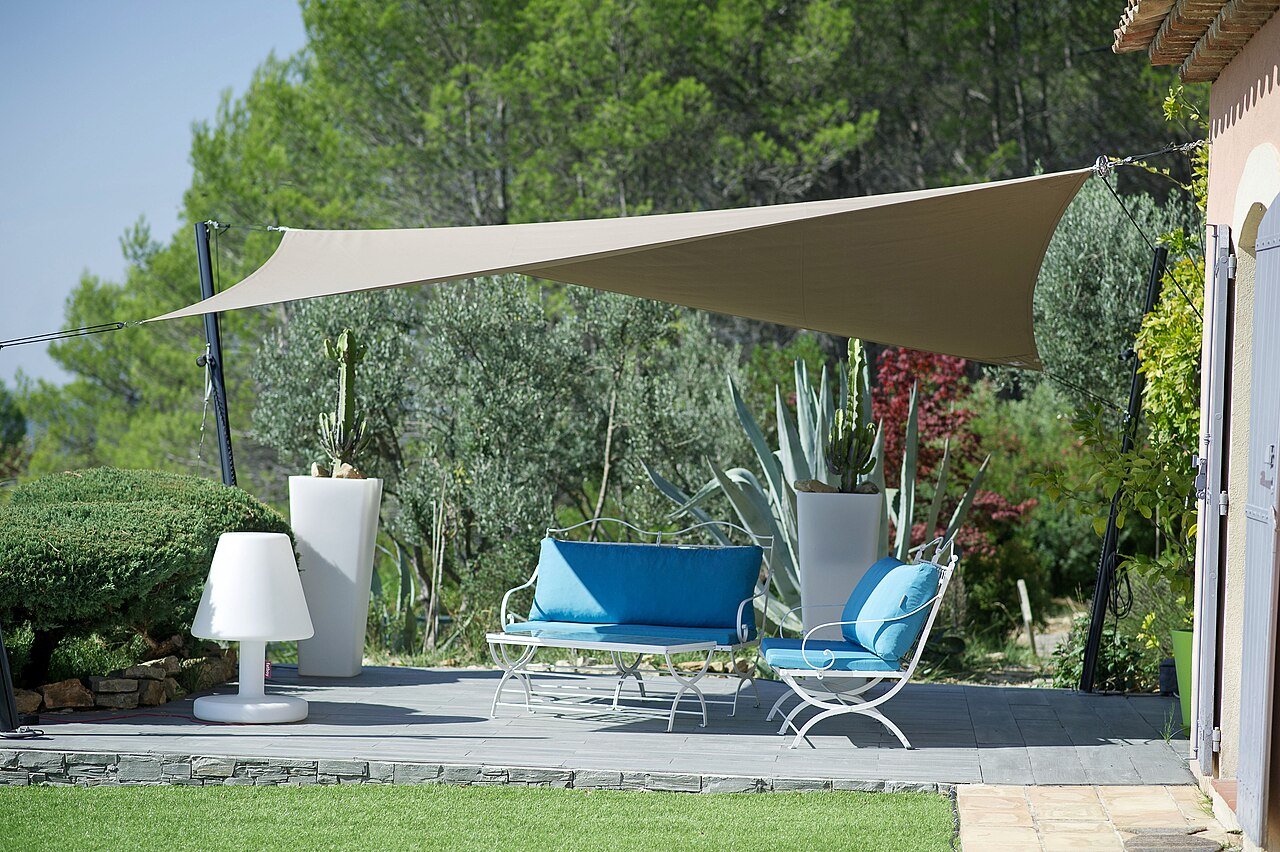
A patio umbrella is movable and usually simpler to add; a shade sail can cover a tailored area but depends on suitable structural attachment and careful installation. The better option depends on the sun path, usable floor area, wind exposure, drainage, and property rules.
Quick comparison
| Question | Patio umbrella | Shade sail |
|---|---|---|
| Permanent attachment | Often not required, but a suitable base is essential | Normally requires engineered attachment points |
| Adjustability | Can often be moved, tilted, or closed as instructed | Coverage is fixed after installation |
| Floor use | Base and pole occupy usable space | May keep the central floor clear |
| Rain handling | Varies by model; close as directed | Requires designed slope, tension, and drainage |
| Rental suitability | Often easier, subject to lease rules | Attachments commonly require written approval |
Map the sun before choosing
Observe the patio at the times you expect to use it. Shade moves by hour and season. A photo taken at noon does not show late-afternoon glare. Mark the area that needs shade while keeping doors, walkways, grills, vents, and required clearances unobstructed.
When an umbrella makes sense
An umbrella can suit renters and patios where shade needs to move. Confirm the canopy, pole, base, and table opening are compatible components. The required base depends on the exact product and use; do not substitute a generic weight rule. Close and store the umbrella according to its instructions before adverse weather.
When a shade sail makes sense
A shade sail can avoid a central pole, but fabric tension creates significant loads at every attachment. Walls, fascia, trees, railings, and posts are not automatically suitable anchors. Installation should follow the sail supplier’s engineering requirements, local rules, and any permit or owner-approval process. Correct slope and tension are also important for drainage.
Questions before committing
- Where is shade needed at the actual time of use?
- Are attachment points verified as suitable?
- Can the shade be removed quickly when instructed?
- Where will water drain?
- What maintenance and seasonal storage are required?
- Will the option conflict with doors, routes, utilities, or neighbors?
Coordinate the shade footprint with the furniture layout, and make a wind plan before installation.
Sources and limits
Wind ratings and installation details are specific to the complete product and site. Follow the manufacturer’s current instructions and consult a qualified professional for structural attachments. Monitor National Weather Service forecasts and warnings.