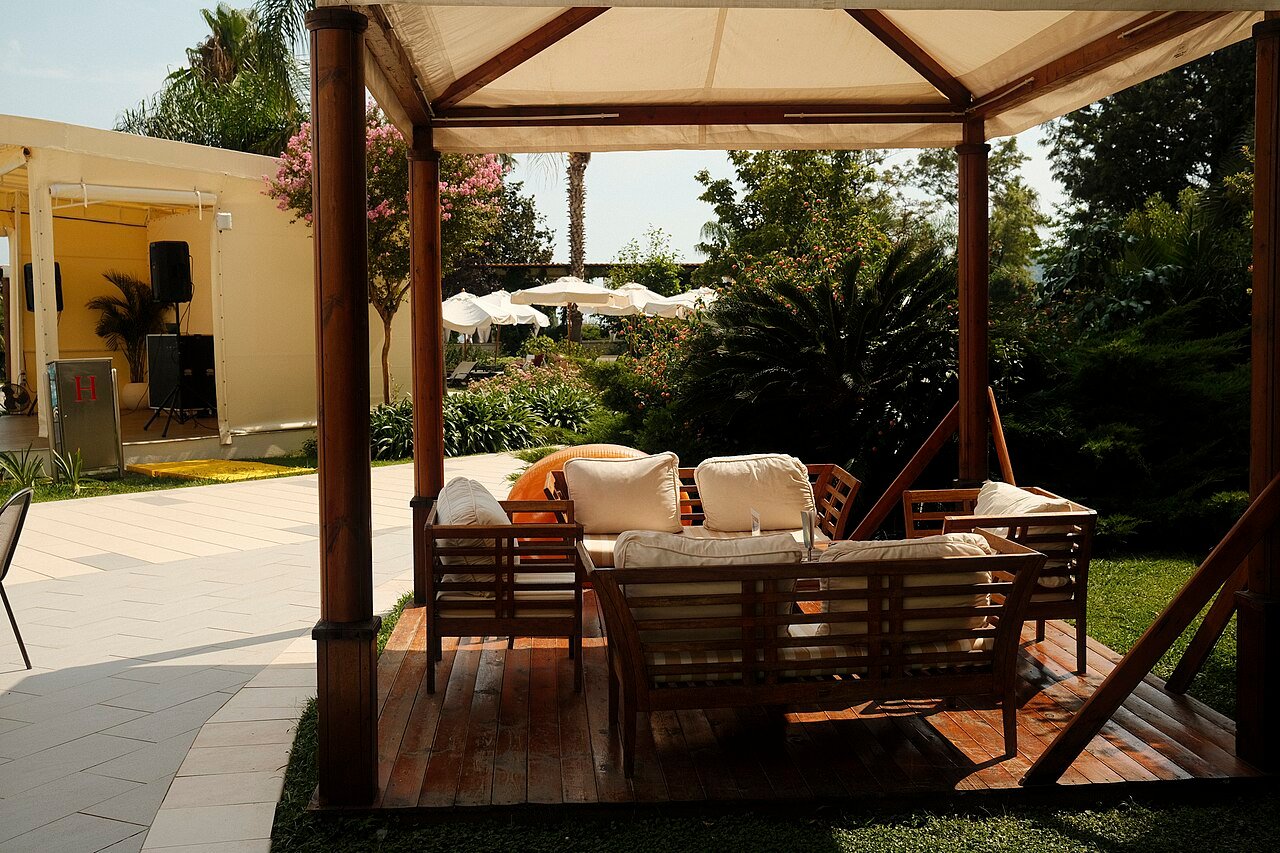
A small patio works best when every piece has a job and the walking route is planned before furniture arrives. The right starting point is not a product photo; it is an accurate sketch of the usable floor area, doors, steps, railings, and the way people need to move through the space.
Measure the usable space
Measure the patio at several points instead of assuming opposite sides are parallel. Mark door swings, sliding-door openings, stairs, utility access, drains, planters, and anything that cannot move. Photograph the empty patio and write every dimension on a simple overhead sketch.
Make a full-size floor test
Use painter’s tape, flattened boxes, or sheets of paper to mark the advertised footprint of each chair and table. Then add the space the furniture needs while in use: a chair occupies more room when someone pulls it back, and a storage lid needs room to open. Walk the route while carrying a tray or bag. If the mock-up already feels awkward, the real furniture will not improve it.
Choose a layout by activity
| Main use | Start with | Common pressure point |
|---|---|---|
| Morning coffee | Two compact chairs and a small table | Door and chair movement |
| Outdoor meals | A table sized to the usual group | Access around occupied seats |
| Reading | One comfortable chair and a movable surface | Sun, glare, and rain exposure |
| Flexible use | Folding or nesting pieces | Where folded items will be stored |
Prioritize the everyday group rather than the largest gathering you might host once a year. Extra folding chairs can be stored elsewhere. A bench can use an edge efficiently, but check seat depth, back comfort, and whether every person can get out without moving the table.
Check the product dimensions that matter
- Overall width, depth, and height—not only seat dimensions.
- Chair depth when upright and when reclined, if adjustable.
- Tabletop size plus the position of legs or a pedestal.
- Stacked or folded dimensions and the weight of each piece.
- Required assembly and whether the packaged item fits through the access route.
Plan exposure and stability
Confirm that the patio can support the intended load and that furniture feet will sit steadily on the actual surface. Follow the furniture manufacturer’s assembly, anchoring, care, and weather instructions. Lightweight pieces need a safe storage or securing plan before windy weather; see how to keep patio furniture from blowing away. For shade planning, compare a patio umbrella with a shade sail.
Before you buy
- Recheck the patio and product measurements.
- Test the footprint at full size.
- Confirm doors, stairs, drains, and utility access remain usable.
- Decide where cushions and movable pieces go during bad weather.
- Read the current manufacturer instructions and return policy.
Sources and limits
Dimensions, loads, wind limits, and anchoring requirements are product- and site-specific. Use the instructions supplied with the exact furniture and follow building or property rules that apply to your patio. For severe-weather readiness, consult the National Weather Service wind-safety guidance.